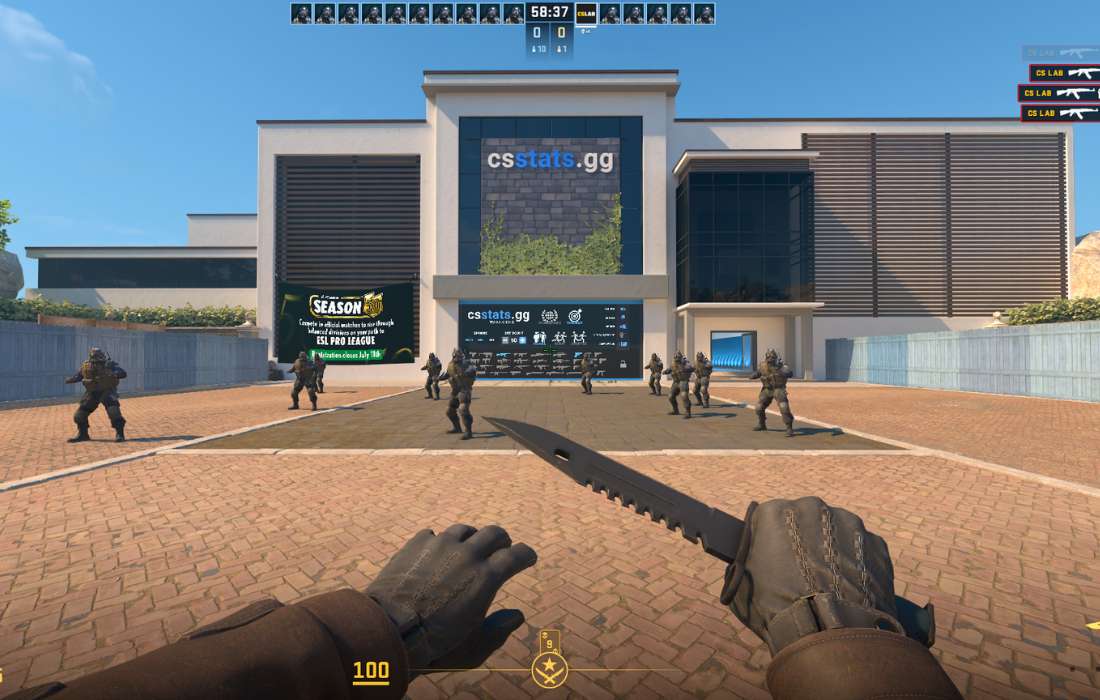
Essential Crosshair Settings: Customize Your Aim for Success in CS2
In CS2, mastering your crosshair settings is crucial for enhancing your shooting accuracy and overall performance. A well-tailored crosshair can significantly impact your aim, allowing you to spot and hit enemies more effectively. To begin customizing your crosshair, navigate to the settings menu and take the time to explore the various options available. Adjust parameters such as size, thickness, and color to create a crosshair that stands out against different backgrounds. Consider using a bright color like neon green or bright pink for high visibility, helping you maintain focus on your targets.
Moreover, keep in mind that your crosshair's style should reflect your personal playstyle. Whether you prefer a static crosshair for greater control or a dynamic one that expands while moving, your choice can influence your gameplay significantly. Experiment with different settings until you find the perfect balance that feels natural to you. Here are some tips to refine your crosshair settings:
- Adjust sensitivity: Fine-tune your mouse sensitivity to ensure precision.
- Test various styles: Try out both static and dynamic crosshairs to see what suits you best.
- Utilize crosshair generators: Use online tools to visualize and create a customized crosshair before applying it in-game.
Counter-Strike is a popular series of multiplayer first-person shooter games where teams compete to complete objectives such as planting or defusing bombs. Players can choose from various game modes, including the Battle Royale mode known as Danger Zone. In this mode, players can improve their gameplay and climb the ranks. For more information about how to progress in the game, you can check out cs go danger zone ranks.
Top 5 Hidden Maps to Sharpen Your Aiming Skills in CS2
If you're looking to sharpen your aiming skills in CS2, exploring lesser-known maps can provide unique challenges that standard gameplay may not offer. Here are the Top 5 Hidden Maps that can help elevate your game. These maps are designed with specific gameplay mechanics intended to improve your precision and reaction time. By integrating these maps into your training routine, you can enhance your muscle memory and develop better crosshair placement.
- Train 007: A classic aim training map with a series of targets to practice your flicks.
- Aim Map: Focused on close-quarter engagements, this map encourages quick reflexes and precision.
- Yprac Aim: A versatile map that offers customizable scenarios to target specific aiming skills.
- Vertigo: Its verticality allows players to practice aiming at multiple height levels.
- Headshot Only: As the name suggests, this map challenges players to aim for the head, reinforcing accuracy.
How to Improve Your Flick Shots: Tips and Techniques for CS2 Players
Improving your flick shots in CS2 requires a blend of practice, technique, and understanding of your own mechanics. One of the most effective ways to enhance your flick shots is by focusing on your aim sensitivity settings. Experiment with different levels to find what feels most comfortable and allows for precise placements. Remember to test your settings in a controlled environment, such as aim training maps or deathmatch servers, where you can focus solely on refining your skills without the pressure of a competitive match. Identify and train your muscle memory through repetitive drills that specifically target flick shots.
In addition to sensitivity adjustments, utilizing crosshair placement can significantly impact your flick shot accuracy. Always aim at head level and anticipate enemy positions as you move through the map. Practice pre-aiming corners and common engagement spots to reduce reaction time. Consider integrating tools like aim trainers into your routine, which often provide customized exercises designed to enhance your flick shot precision. By combining these techniques with consistent practice, you'll notice a marked improvement in your flick shots, ultimately elevating your overall gameplay experience in CS2.